|
|
|
|
|
|
|
|
 |
 |
 |
 |
 |
 |
 |
 |
 |
 |
 |
 |
 |
 |
|
| |||||||||||||||||||||||||||||||||||||
| |||||||||||||||||||||||||||||||||||||||||||||||||||||||
| Signatures on this item | |
| *The value given for each signature has been calculated by us based on the historical significance and rarity of the signature. Values of many pilot signatures have risen in recent years and will likely continue to rise as they become more and more rare. | |
| Name | Info |
 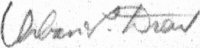 Maj Urban L Drew USAF (deceased) *Signature Value : £40 | Urban 'Ben' Drew was born in Detroit, Michigan in 1924. Three months after the attack on Pearl Harbor, at the age of eighteen, Drew joined the USAAF and commenced pilot training. He earned his wings and a commission at Mariana, Florida in October 1943. He remained in the States honing his flying skills as an instructor pilot for the North American P-51 Mustang at Bartow, Florida. In May of 1944 he received his first overseas combat assignment, sailing to England on the Queen Elizabeth. He was assigned to the 375th Fighter Squadron 'Yellowjackets' of the 361st Fighter Group based in at Bottisham in Cambridgeshire. Later his squadron would be relocated to Little Walden in Essex. During his combat tour Drew would fly a total of seventy-five combat missions, rising to command of X Flight and later to command of the 375th squadron. Drew would be officially credited with six aerial victories during his combat tour. Notable was his downing of two Me-262 jets on October 7, 1944. He was the first fighter pilot to down two of the German jets, and he received the Air Force Cross for this achievement. Also of note was the ace's destruction of the largest aircraft to fly in WW 11, the BV-238, which he destroyed in a strafing pass with two wingman on Lake Schaal on September 18, 1944. Following his successful combat tour, Drew returned to the States where he again served as a flight instructor. In 1945 he was assigned to the 412 th Fighter Squadron of the 414 th Fighter Group based at lwo Jima flying the P-47 Jug. Drew's final victory tally included 6 confirmed aerial victories, 1 damaged, and 1 additional aircraft destroyed on the ground. In addition to the Air Force Cross, Drew was awarded two Distinguished Flying Crosses and 14 Air Medals. Following the War Drew helped organize the 127 th Fighter Group of the Michigan National Guard. He became Deputy Group Commander and later was appointed the first Air Adjutant General of the State of Michigan. After his retirement from the Air Force with the rank of Major, he established an aviation business in Britain and South Africa. He currently resides in Southern California, and remains active in matters involving the American Fighter Aces Association. Sadly we have learned that Ben Drew passed away on 3rd April 2013. |
| The Aircraft : | |
| Name | Info |
| Mustang | The ubiquitous North American P-51 Mustang, which many consider to be the best all-around fighter of WW II, owes its origins to the British Air Ministry. Following Britains entry into WW II in 1939, the RAF was interested in purchasing additional fighter aircraft from American sources, particularly the Curtiss P-40. Curtiss, which was busy, was unable to guarantee timely delivery so the British approached North American Aviation as a possible second source for the P-40. North American chose to propose its own fighter design which would use the same Allison engine as the P-40. Utilizing new laminar flow wings, the North American fighter was expected to have performance better than the P-40. Developed in record time the new aircraft was designated as a Mustang I by the Brits, whereas the USAAF ordered two for evaluation which were designated XP-51 Apaches. Intrigued with the possibility of using this aircraft also as a dive bomber, North American proposed this to the USAAF which decided to order 500 of the P-51 aircraft to be modified for dive bombing use. Designated as the A-36 Invader, this version of the Mustang utilized dive flaps, and bomb racks under each wing. Some reinforcing of the structural members was also required because of the G-forces to be encountered in dive bombing. A-36s entered combat service with the USAAF prior to any P-51s. In early 1943 the 86th and 27th Fighter Bomber Groups of the 12th Air Force began flying A-36s out of Northern Africa. Despite some early problems with instability caused by the dive flaps, the A-36 was effective in light bombing and strafing roles. It was not, however, capable of dog fighting with German fighters, especially at higher altitudes. Despite these drawbacks one USAAF pilot, Captain Michael T. Russo, who served with the 16th Bomb Squadron of the 27th Fighter Bomber Group, was credited with five confirmed aerial victories in the A-36, thereby becoming the first mustang ace. |
| Bv238 | |
| Artist Details : Stan Stokes |
| Click here for a full list of all artwork by Stan Stokes |
 Stan Stokes Stan Stokes is a California native with more than 37 years as a full time professional artist, who developed a passion for vintage cars, trains and airplanes at an early age. Model building and RC planes filled the many hours of the young enthusiasts free time. However, unlike most other young aviation enthusiasts Stokes also displayed a great gift for artistic talent. After studying art in College, Stan decided to pursue a career as a professional artist. Stokes initially focused his great talents on depicting uniquely realistic landscapes of the western desert and mountain scenes. More than thirty years ago a good friend suggested that Stan combine his passion for aviation history and flying with his artistic talents, and render an aircraft or two. The rest is history. Stan has won many prestigious awards including the Benedictine Art Award in 1975 and the Smithsonian National Air and Space Museums Golden Age of Flight award in 1985. In May of 2000, Stan was honored with the National Museum of Naval Aviations R. G. Smith Award for Excellence in Naval Aviation Art. Commissioned by the Ronald Reagan Presidential Library in Simi Valley, California, Stans 12 x 120 foot mural of the History of the Flying White House is on permanent display in the Air Force One Pavilion. In addition Stans painting of the USS Ronald Reagan is hanging in the Legacy Room of the library. In 2005 Stan also completed a painting of our nations next aircraft carrier, the USS George H. W. Bush, which is on permanent display at the George H. W. Bush Presidential Library in College Station, Texas. Stan has also completed several impressive murals for the Palm Springs Air Museum including: The Tuskegee Airmen at 12 x 60 feet and contains 51 portraits of the original Tuskegee Airmen. Dauntless at Midway at 12 x 34 feet and Corsair on Approach at 19 x 55 feet. Stans work also hangs in the Air Force art collection, the Pentagon, San Diego Aerospace Museum, and the Smithsonian National Air and Space Museum in Washington DC. Stan has had the pleasure of meeting and working with many of his boyhood aviation heroes, including the late General Jimmy Doolittle, the late Pappy Boyington, Chuck Yeager, and many many others. A true aviation history buff, Stan often spends more time pouring over research materials for his paintings to assure their accuracy to the smallest detail than he does behind the canvas. Noted for his incredible detail and strikingly realistic illustration, Stans canvases have a life-like three-dimensional effect that often leaves viewers spellbound. Today his work encompasses not only aviation and space but also portraits, landscapes, ships, classic cars and his new collection of cat-related fine art paintings. Stan particularly enjoys the tough assignment. During his 37 years as a professional artist, he has been asked to produce literally hundreds of paintings documenting historical events, people and places. Although Stan has logged many hours flying his own airplanes, in recent years pleasure flying has had to take a backseat to the artistic demands of his backlog. Stan was commissioned to paint more than twenty original paintings for an aviation museum being in the Philippines. Since the mid-1980s NASA has also tapped Stans talents from time to time and he has completed more than fifteen paintings ranging from the space shuttles to the SR 71 Blackbird. Stan has also painted numerous works for the cutting edge genius in aviation and space design, Burt Rutan. More about Stan Stokes |
|
Contact Details |
|
Sign Up To Our Newsletter!
This website is owned by Cranston Fine Arts. Torwood House, Torwoodhill Road, Rhu, Helensburgh, Scotland, G848LE Contact: Tel: (+44) (0) 1436 820269. Email: cranstonorders -at- outlook.com |
 |


 Drew, Urban
  (signed in person)


