

Please note that our logo (below) only appears on the images on our website and is not on the actual art prints.

|
|
D-Day Normandy Spitfire Aviation Prints by Robert Taylor and Adrian Rigby.
PCK1929. D-Day Normandy Spitfire Aviation Prints by Robert Taylor and Adrian Rigby. Aviation Print Pack.
Items in this pack :
Item #1 - Click to view individual item
DHM2126. Canadian Wing by Robert Taylor. Spitfires of Johnsons Canadian Wing, complete with Normandy Invasion markings, making a sweep above the Normandy beaches on the 6th June, 1944 - D-Day. Johnson and his Canadian pilots flew sweeps on this day from dawn till dusk, limited most of the day to 2000 ft. by the cloudbase. Last 15 prints of this edition which is now sold out at the publisher. Signed by Air Vice Marshal Johnnie Johnson CB, CBE, DSO**, DFC* (deceased). Signed edition. Paper size 24 inches x 20 inches (61cm x 51cm)
Item #2 - Click to view individual item
DHM2491. The Longest Day by Adrian Rigby. Published to commemorate the 60th anniversary of the D-Day landings on 6th June, depicting Spitfires of 44 Squadron led by Johnnie Johnson. Signed by Wing Commander Paddy Barthropp (deceased) and Flying Officer Ken Wilkinson. Signed limited edition of 250 prints. Image size 24 inches x 13 inches (61cm x 33cm)

Website Price: £ 260.00
To purchase these prints individually at their normal retail price would cost £410.00 . By buying them together in this special pack, you save £150
All prices are displayed in British Pounds Sterling
|
|
|
| Signatures on this item | | *The value given for each signature has been calculated by us based on the historical significance and rarity of the signature. Values of many pilot signatures have risen in recent years and will likely continue to rise as they become more and more rare. | | Name | Info | 

Air Vice Marshal Johnnie Johnson CB, CBE, DSO**, DFC* (deceased)
*Signature Value : £60 (matted)
| James Edgar Johnson was born in Barrow on Soar near Loughborough on 9th March 1915. He lived in Melton, the first house on the left of Welby Lane as you leave Nottingham Road, with his parents - his father being a local Police Inspector. Johnnie qualified as a Civil Engineer at Nottingham University in 1937. He joined the RAFVR and did his flying training at 21 E&RFTS, Stapleford before enlisting for full-time service in the RAF at the beginning of WWII. He first went to ITW at Jesus College, Cambridge, completed his ab initio flying at 22 EFTS, Cambridge and his intermediate and advanced flying at 5 FTS, Sealand. Johnnie Johnson joined 92 Spitfire squadron in August 1940, but it was with 616 squadron that he scored his first victory on June 26th 1941 while flying with Douglas Baders Tangmere Wing. He was squadron leader of 610 squadron in July 1942, but it was as Wing Commander of the Kenley Wing in 1943 that his scores really started to mount. He was W/C of 144 wing during D-Day and led 127 and 125 wings until the end of the war when we has the topscoring allied fighter pilot with 38 air victories. Inspired by the great British WW 1 aces like Bishop and Ball, Johnnie Johnson dreamed often as a child of becoming an R.A.F. pilot. The young Johnson enthusiastically joined the Volunteer Reserve at the first opportunity. After completing his initial flight training Johnson was posted to 616 Squadron at Kenley. However, this Squadron had been hit hard with the loss of six pilots and five wounded, and the unit was withdrawn to Coltishall prior to Johnson encountering combat. With only 12 hours of flight time in a Spitfire this was no doubt advantageous. In February 1941 Billy Burton moved the Squadron to Tangmere. Douglas Bader then arrived to take over the Tangmere Wing, and fly with the 616 Squadron. Johnnie, Alan Smith and Cocky Dundas were chosen to fly with Bader. During the summer of 1940 the Battle of Britain was at its peak. Bader took the time to instruct Johnson carefully in both the art of flying and the skills necessary to attain success in aerial combat. Baders idea of an afternoon off duty, according to Johnson, was to take his section over the Channel in hopes of running into Adolph Galland and his Abbeyville Boys. On August 19, 1941 Bader failed to return from a mission when 616 Squadron was hit hard by a group of Messerschmitt 109s. Johnson flew on in Baders absence, and in the summer of 1942 he was promoted to command of the 610 Squadron. In 1943 he was promoted again to Wing Commander of the Canadian Spitfire Wing in Kenley. By that time Johnson had attained eight confirmed victories. During the spring and summer of 1943 Johnnie led the Canadian unit on more than 140 missions over Northwest Europe. Johnsons squadron attained more than 100 victories during this period, and Johnnies own personal score rose to 25. After a short leave, Johnson was posted to lead the 144 Canadian Spitfire Wing. On D-Day Johnson led his Wing on four missions in support of the Allied invasion. On June 8, Johnsons Wing was the first Spitfire group to land in newly liberated France. Johnson continued fighting in France through September 1944 when he achieved his 38th and final victory. Patrolling the Rhine Johnsons unit jumped nine 109s which were flying beneath them in the opposite direction. Five of the 109s were downed. Early in 1945 Johnson was promoted to Group Captain and put in command of the 125 Wing, which was equipped with the Spitfire XIV. Flying from former Luftwaffe airfields the 125 Wing assisted in the final Allied push to Berlin. Johnson attributed much of his aerial combat success to his ability to make tight turning maneuvers. Johnsons tightest call came on August 19, 1942 when he was unable to dislodge an Me-109 from his tail during the raid on Diepppe. Johnson raced his Spitfire flat out at a group of Royal Navy ships. The usual barrage of flak and tracer fire came right at him, and fortunately for the ace, missed his Spitfire but effectively eliminated the brave pilot on his tail. During the Korean War Johnson flew fighter-bombers with the USAF. Following his retirement from the R.A.F. in 1966 Johnson founded the Johnnie Johnson Housing Trust that has provided homes for more than 4000 disabled and elderly persons, and his sixth book Winged Victory was published in 1995. Johnson flew many of the Spitfire models. His favorite was the beautiful Mark IX, the best of them all. Johnnie passed away in 2001 at the age of 85, in Derbyshire, England.
|
| Signatures on item 2 | | *The value given for each signature has been calculated by us based on the historical significance and rarity of the signature. Values of many pilot signatures have risen in recent years and will likely continue to rise as they become more and more rare. | | Name | Info | 
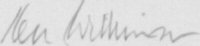
Flying Officer Ken Wilkinson (deceased)
*Signature Value : £45 (matted)
| Battle of Britain pilot flying Hurricanes, he flew Spitfires with 611 Sqn and then 616 Sqn at Kirton-in-Lindsey and 19 Sqn at Fowlmere during 1940 and after a spell instructing returned to operations on Spitfires, with 234 and 165 Squadrons. After spending time with 53, 24 and 10 Operational Training Units, he left the RAF in November 1945 and served in the RAFVR.
Ken said :
From 1st September 1939 I wrote myself off. I thought, 'you've got no chance' lasting through whatever is going to be. It was quite obvious, in the way the Germans were moving, they were going to make a hell of a war out of it, so I was ready for war. I can remember saying 'we've got to stop this fellow Hitler'. When you think of all the thousands of citizens that were being killed by this absurd bombing. They had to pay for it didn't they. Yes, we lost people. Friends that didn't come back. I don't think we were the sort of people to brood over it, ever. You have to get into an attitude to make sure that you're as cold as a fish. Once someone has failed to return, that's it. Fortune smiled on me and not on some of the others. I can only say that whoever it was who popped off at me, wasn't a very good marksman. It transpired that we were doing something far more important than we thought. As far as we were concerned, it was just that there were some untidy creatures from over the other side of the channel, trying to bomb England and the United Kingdom. And we didn't want them to bomb us. After all, we never asked the Germans to start this nonsense, did we? But they did, and we had to stop them, and we did. It's our country. You die for you country.
| 

Wing Commander Paddy Barthropp DFC AFC (deceased)
*Signature Value : £60 (matted)
| At the outbreak of war Paddy flew obsolete Hinds, Hectors and Lysanders in combat, but converted to Spitfires and joined 602 Squadron at Tangmere. During the Battle of Britain he flew with some of the great aces - Douglas Bader, Sailor Malan, and Bob Stanford Tuck. In 1941 he was a Flight Commander with 610 Squadron. Continuing to fly Spitfires, now with 122 Squadron based at Hornchurch, he flew fighter sweeps and escort missions. On 17th May 1942 he was shot down over St Omer. He baled out but was captured, spending the next three years as a POW. One of the RAFs best known and best loved characters, though the bane of certain senior officers, Paddy Barthropps RAF service spanned the period from bi-planes to supersonic jets. Joining the RAF in 1938, his first squadron was 613 flying Hinds, Hectors and Lysanders. In 1940 he was released to fly Spitfires with 602 Squadron where he shared in the destruction of two aircraft. He was posted to 610 Squadron, and then to 91 Squadron, shooting down two Bf 109s during summer 1941 and receiving the DFC. In August 1941 he returned to 610 Squadron as a flight commander. He was shot down three times, the third time being taken prisoner ofwar. He had by then brought his total to 9. Scraps in the air were accompanied by scrapes on the ground, and appearances in Magistrates Courts for disorderly conduct. Addicted to fast cars and lively ladies - and the sworn enemy of stuffed shirts everywhere - he was the irrepressible life and soul of any party, and a persistant thorn in the side of overweening authority as the Germans were to discover. The war over, he was posted to the Empire Test Pilots School where he flew over a hundred different types of plane in ten months. Soon, he was out in the Sudan and in serious trouble again - under arrest after taking a hippo to an upper-crust party. As a boy, he had been taught to ride by champion jockey Steve Donaghue and now, posted to Hong Kong, he rode winners on the track at Happy Valley, and seriously thought of turning professional. Then it was back to the U.K. to take up an appointment as a Fighter Station Commander, and to lead the Coronation fly-past over Buckingham Palace. He left the RAF to set up his own luxury car-hire firm. He died on 16th April 2008. |
| Artist Details : Robert Taylor | | Click here for a full list of all artwork by Robert Taylor |

Robert Taylor
The name Robert Taylor has been synonymous with aviation art over a quarter of a century. His paintings of aircraft, more than those of any other artist, have helped popularise a genre which at the start of this remarkable artist's career had little recognition in the world of fine art. When he burst upon the scene in the mid-1970s his vibrant, expansive approach to the subject was a revelation. His paintings immediately caught the imagination of enthusiasts and collectors alike . He became an instant success. As a boy, Robert seemed always to have a pencil in his hand. Aware of his natural gift from an early age, he never considered a career beyond art, and with unwavering focus, set out to achieve his goal. Leaving school at fifteen, he has never worked outside the world of art. After two years at the Bath School of Art he landed a job as an apprentice picture framer with an art gallery in Bath, the city where Robert has lived and worked all his life. Already competent with water-colours the young apprentice took every opportunity to study the works of other artists and, after trying his hand at oils, quickly determined he could paint to the same standard as much of the art it was his job to frame. Soon the gallery was selling his paintings, and the owner, recognising Roberts talent, promoted him to the busy picture-restoring department. Here, he repaired and restored all manner of paintings and drawings, the expertise he developed becoming the foundation of his career as a professional artist. Picture restoration is an exacting skill, requiring the ability to emulate the techniques of other painters so as to render the damaged area of the work undetectable. After a decade of diligent application, Robert became one of the most capable picture restorers outside London. Today he attributes his versatility to the years he spent painstakingly working on the paintings of others artists. After fifteen years at the gallery, by chance he was introduced to Pat Barnard, whose military publishing business happened also to be located in the city of Bath. When offered the chance to become a full-time painter, Robert leapt at the opportunity. Within a few months of becoming a professional artist, he saw his first works in print. Roberts early career was devoted to maritime paintings, and he achieved early success with his prints of naval subjects, one of his admirers being Lord Louis Mountbatten. He exhibited successfully at the Royal Society of Marine Artists in London and soon his popularity attracted the attention of the media. Following a major feature on his work in a leading national daily newspaper he was invited to appear in a BBC Television programme. This led to a string of commissions for the Fleet Air Arm Museum who, understandably, wanted aircraft in their maritime paintings. It was the start of Roberts career as an aviation artist. Fascinated since childhood by the big, powerful machines that man has invented, switching from one type of hardware to another has never troubled him. Being an artist of the old school, Robert tackled the subject of painting aircraft with the same gusto as with his large, action-packed maritime pictures - big compositions supported by powerful and dramatic skies, painted on large canvases. It was a formula new to the aviation art genre, at the time not used to such sweeping canvases, but one that came naturally to an artist whose approach appeared to have origins in an earlier classical period. Roberts aviation paintings are instantly recognisable. He somehow manages to convey all the technical detail of aviation in a traditional and painterly style, reminiscent of the Old Masters. With uncanny ability, he is able to recreate scenes from the past with a carefully rehearsed realism that few other artists ever manage to achieve. This is partly due to his prodigious research but also his attention to detail: Not for him shiny new factory-fresh aircraft looking like museum specimens. His trade mark, flying machines that are battle-scarred, worse for wear, with dings down the fuselage, chips and dents along the leading edges of wings, oil stains trailing from engine cowlings, paintwork faded with dust and grime; his planes are real! Roberts aviation works have drawn crowds in the international arena since the early 1980s. He has exhibited throughout the US and Canada, Australia, Japan and in Europe. His one-man exhibition at the Smithsonians National Air and Space Museum in Washington DC was hailed as the most popular art exhibition ever held there. His paintings hang in many of the worlds great aviation museums, adorn boardrooms, offices and homes, and his limited edition prints are avidly collected all around the world. A family man with strong Christian values, Robert devotes most of what little spare time he has to his home life. Married to Mary for thirty five years, they have five children, all now grown up. Neither fame nor fortune has turned his head. He is the same easy-going, gentle character he was when setting out on his painting career all those years ago, but now with a confidence that comes with the knowledge that he has mastered his profession. Sadly he passed away in January 2024.
More about Robert Taylor
|
|


