|
|
|
|
|
|
|
|
 |
 |
 |
 |
 |
 |
 |
 |
 |
 |
 |
 |
 |
 |
|
| |||||||||||||||||||||||||||||||||||||||||
| ||||||||||||||||||||||||||||||||||||||||||||||||||||||||||||||||||||
| Signatures on this item | |
| *The value given for each signature has been calculated by us based on the historical significance and rarity of the signature. Values of many pilot signatures have risen in recent years and will likely continue to rise as they become more and more rare. | |
| Name | Info |
 Flt Lt Joseph Peterburs *Signature Value : £45 | Joe Peterburs enlisted in the US Army Air Corps on the 30th of November, 1942 and was called to active duty as an Aviation Cadet on 26th January, 1943. On 15th April, 1944 after a rigorous flying training program, he received his pilots wings and commission as a 2nd Lieutenant. After graduation he flew the P-40N and A-24 during combat replacement training. On 6th November, 1944 Lt. Peterburs arrived in England and was assigned to the 55th Fighter Squadron of the 20th Fighter Group. He was 19 years old. The unit was equipped with the P-51 Mustang fighter aircraft and he quickly checked out in a P-51B and accumulated about 20 hours in the B, C and D models before flying combat. He flew many memorable missions, the 49th and last of which was the most exciting. On this mission, 10 April, 1945, Joe Peterburs shot down German Ace Walter Schuck in his Me262 turbo jet. Later that day Joe Peterburs was also shot down by enemy ground fire while strafing an airfield. He was captured, escaped and fought with a Russian tank unit to the battle of Wittenberg on the Elbe. |
 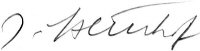 General Johannes Steinhoff (deceased) *Signature Value : £70 (clipped) | By early 1940 Macky Steinhoff was leading 4 / JG-52 during the Battle of Britain. He was then transferred to the eastern front where his success continued. In the final stages of the defence of the Reich he joined JV-44 flying the ME 262 in which he scored 6 victories before being seriously burned in a crash. He flew 939 missions scored 178 victories and was awarded the Knights Cross with Oak leaves and swords. |
  Major Erich Rudorffer (deceased) *Signature Value : £65 (clipped) | Erich Rudorffer was born on November 1st 1917 in the town of Zwickau in Saxony. Erich Rudorffer joined the Luftwaffes I./JG2 Richthofen in November 1939, and was soon flying combat patrols in January 1940 and was assigned to I/JG 2 Richthofen with the rank of Oberfeldwebel. He took part in the Battle of France, scoring the first of his many victories over a French Hawk 75 on May 14th, 1940. He went on to score eight additional victories during the Battle of France and the Battle of Britain. Rudorffer recalled an incident in August 1940 when he escorted a badly damaged Hurricane across the Channel - ditching in the English Channel was greatly feared by pilots on both sides. As fate often does, Rudorffer found the roles reversed two weeks later, when he was escorted by an RAF fighter after receiving battle damage. By May 1st 1941 Rudorffer had achieved 19 victories, which led to the award of the Knights Cross. In June 1941 Rodorffer became an Adjutant of II./JG2. In 1942 Rudorffer participated in Operation Cerberus (known as the Channel Dash) and flew over the Allied landings at Dieppe. Erich Rudorffer along with JG2 was transferred to North Africa in December 1942. It was in North Africa that Rudorffer showed his propensity for multiple-victory sorties. He shot down eight British aircraft in 32 minutes on February 9th 1943 and seven more in 20 minutes six days later. After scoring a total of 26 victories in Tunisia, Rudorffer returned to France in April 1943 and was posted to command II./JG54 in Russia, after Hauptmann Heinrich Jung, its Kommodore, failed to return from a mission on July 30th 1943. On August 24th 1943 he shot down 5 Russian aircraft on the first mission of the day and followed that up with three more victories on the second mission. He scored seven victories in seven minutes on October 11th but his finest achievement occurred on November 6th when in the course of 17 minutes, he shot down thirteen Russian aircraft. Rudorffer became known to Russian pilots as the fighter of Libau. On October 28th 1944 while about to land, Rudorffer spotted a large formation of Il-2 Sturmoviks. He quickly aborted the landing and moved to engage the Russian aircraft. In under ten minutes, nine of the of the II-2 Sturmoviks were shot down causing the rest to disperse. Rudorffer would later that day go on and shoot down a further two Russian aircraft. These victories took his total to 113 and he was awarded the Oak Leaves on April 11th 1944. Rudorffer would on the 26th January 1945 on his 210th victory receive the addition of the Swords. In February 1945 Rudorffer took command of I./JG7 flying the Me262. He was one of the first jet fighter aces of the war, scoring 12 victories in the Me262. He shot down ten 4-engine bombers during the 'Defense of the Reich missions'. He was the master of multiple scoring - achieving more multiple victories than any other pilot. Erich Rudorffer never took leave, was shot down 16 times having to bail out 9 times, and ended the war with 222 victories from over 1000 missions. He was awarded the Knights Cross, with Oak Leaves and Swords. Erich Rudorffer died on 8th April 2016. |
  Oberleutnant Walter Schuck (deceased) *Signature Value : £60 (clipped) | Initially with JG3, Walter Schuck was posted north to 7./JG5 in April 1942. On 15 June 1944 he chalked up his 100th victory during a day when he shot down 6 aircraft. Two days later he had his most successful day, achieving 12 victories in twenty-four hours, a feat never surpassed in JG5. On 1 August, he assumed command of 10./JG5. Walter Schuck transferred to fly the Me262 as Staffelkapitan of 3./JG7, and achieved 8 further victories flying the new jet. His final tally was 206 air victories. He was awarded the Knights Cross with Oak Leaves. Walter Schuck died on 27th March 2015. |
| The Aircraft : | |
| Name | Info |
| Mustang | The ubiquitous North American P-51 Mustang, which many consider to be the best all-around fighter of WW II, owes its origins to the British Air Ministry. Following Britains entry into WW II in 1939, the RAF was interested in purchasing additional fighter aircraft from American sources, particularly the Curtiss P-40. Curtiss, which was busy, was unable to guarantee timely delivery so the British approached North American Aviation as a possible second source for the P-40. North American chose to propose its own fighter design which would use the same Allison engine as the P-40. Utilizing new laminar flow wings, the North American fighter was expected to have performance better than the P-40. Developed in record time the new aircraft was designated as a Mustang I by the Brits, whereas the USAAF ordered two for evaluation which were designated XP-51 Apaches. Intrigued with the possibility of using this aircraft also as a dive bomber, North American proposed this to the USAAF which decided to order 500 of the P-51 aircraft to be modified for dive bombing use. Designated as the A-36 Invader, this version of the Mustang utilized dive flaps, and bomb racks under each wing. Some reinforcing of the structural members was also required because of the G-forces to be encountered in dive bombing. A-36s entered combat service with the USAAF prior to any P-51s. In early 1943 the 86th and 27th Fighter Bomber Groups of the 12th Air Force began flying A-36s out of Northern Africa. Despite some early problems with instability caused by the dive flaps, the A-36 was effective in light bombing and strafing roles. It was not, however, capable of dog fighting with German fighters, especially at higher altitudes. Despite these drawbacks one USAAF pilot, Captain Michael T. Russo, who served with the 16th Bomb Squadron of the 27th Fighter Bomber Group, was credited with five confirmed aerial victories in the A-36, thereby becoming the first mustang ace. |
| Artist Details : Ivan Berryman |
| Click here for a full list of all artwork by Ivan Berryman |
 Ivan Berryman Over the last 30 years, Ivan Berryman has become a leading aviation, motor racing and naval artist. In this time, the subjects of his paintings have been wide and varied as he has deliberately strived to include some of the lesser know aircraft, ships and events in his portfolio, which includes aircraft like the Defiant, TSR2, Beaufort, ships including MTBs and corvettes, and around 100 different aircraft of the first world war. In addition to this he has taken new approaches to the classic subjects of his field, including the Dambuster Lancasters, Battle of Britain Spitfires, Bf109s and Hurricanes, HMS Hood, Bismarck and the best known naval ships, as well as some iconic sporting moments. In his own words : Art and aviation have been like a brother and sister to me. We have grown up together, learned together and made our adult lives together. But you do not have to have an appreciation of aircraft to admire the graceful lines of a Spitfire or the functional simplicity of a Focke-Wulf 190. They are themselves a work of art and they cry out to be painted - not as machines of war and destruction, but as objects of beauty, born of necessity and function, yet given a life and iconic classicism beyond their original calling. My interest and love of art and aircraft was gifted to me by my father, a designer and aeronautical engineer of considerable repute. Denis Berryman C.Eng. FRAeS. He gave me his eyes, his passion, his dedication and his unwavering professionalism. I owe him everything. And I miss him terribly. A love of art and of beautiful and interesting things takes you on a journey. You discover new interests, new fascinations, and you want to paint them. You want to paint them in their environment, in their element. Whether it is an aeroplane, a warship, a racing car or a beautiful woman, their gift to an artist is the same: Their lines, their texture and the way that light and shadows give them form. These are the food and oxygen of an artist. Not the paint and the canvas. These are mere tools. The secret is in the passion and the perception... More about Ivan Berryman |
|
Contact Details |
|
Sign Up To Our Newsletter!
This website is owned by Cranston Fine Arts. Torwood House, Torwoodhill Road, Rhu, Helensburgh, Scotland, G848LE Contact: Tel: (+44) (0) 1436 820269. Email: cranstonorders -at- outlook.com |
 |


 Peterburs, Joseph (signed in person)
 (clipped)


 Peterburs, Joseph (signed in person)


