|
|
|
|
|
|
|
|
 |
 |
 |
 |
 |
 |
 |
 |
 |
 |
 |
 |
 |
 |
|
| |||||||||||||||||||||||||||||||||||||
| ||||||||||||||||||||||||||||||||||
| The Aircraft : | |
| Name | Info |
| Flying Fortress | In the mid-1930s engineers at Boeing suggested the possibility of designing a modern long-range monoplane bomber to the U.S. Army Air Corps. In 1934 the USAAC issued Circular 35-26 that outlined specifications for a new bomber that was to have a minimum payload of 2000 pounds, a cruising speed in excess of 200-MPH, and a range of at least 2000 miles. Boeing produced a prototype at its own expense, the model 299, which first flew in July of 1935. The 299 was a long-range bomber based largely on the Model 247 airliner. The Model 299 had several advanced features including an all-metal wing, an enclosed cockpit, retractable landing gear, a fully enclosed bomb bay with electrically operated doors, and cowled engines. With gun blisters glistening everywhere, a newsman covering the unveiling coined the term Flying Fortress to describe the new aircraft. After a few initial test flights the 299 flew off to Wright Field setting a speed record with an average speed of 232-mph. At Wright Field the 299 bettered its competition in almost all respects. However, an unfortunate crash of the prototype in October of 1935 resulted in the Army awarding its primary production contract to Douglas Aircraft for its DB-1 (B-18.) The Army did order 13 test models of the 299 in January 1936, and designated the new plane the Y1B-17. Early work on the B-17 was plagued by many difficulties, including the crash of the first Y1B-17 on its third flight, and nearly bankrupted the Company. Minor quantities of the B-17B, B-17C, and B-17D variants were built, and about 100 of these aircraft were in service at the time Pearl Harbor was attacked. In fact a number of unarmed B-17s flew into the War at the time of the Japanese attack. The German Blitzkrieg in Europe resulted in accelerated aircraft production in America. The B-17E was the first truly heavily armed variant and made its initial flight in September of 1941. B-17Es cost $298,000 each and more than 500 were delivered. The B-17F and B-17G were the truly mass-produced wartime versions of the Flying Fortress. More than 3,400 B-17Fs and more than 8,600 B-17Gs would be produced. The American daylight strategic bombing campaign against Germany was a major factor in the Allies winning the War in Europe. This campaign was largely flown by B-17 Flying Fortresses (12,677 built) and B-24 Liberators (18,188 built.) The B-17 bases were closer to London than those of the B-24, so B-17s received a disproportionate share of wartime publicity. The first mission in Europe with the B-17 was an Eighth Air Force flight of 12 B-17Es on August 12, 1942. Thousands more missions, with as many as 1000 aircraft on a single mission would follow over the next 2 ½ years, virtually decimating all German war making facilities and plants. The B-17 could take a lot of damage and keep on flying, and it was loved by the crews for bringing them home despite extensive battle damage. Following WW II, B-17s would see some action in Korea, and in the 1948 Israel War. There are only 14 flyable B-17s in operation today and a total of 43 complete airframes |
| Artist Details : John Young |
| Click here for a full list of all artwork by John Young |
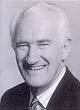 John Young John Young was born in Bristol, England in 1930. His love affair with aviation began after a visit to Sir Alan Cobham's National Aviation Day air show in a farmer's pasture near his home in Chesham. Watching Eighth Air Force B-17s and B-24s operate out of nearby Bovingdon during WWII further fueled Young's interest in aviation and helped develop his historic interest in aviation. Young has painted professionally since 1950. In 1960, after having established a career in illustration for many aviation manufacturers, airlines, air forces, and publishers, Young went freelance to further develop his talents and move towards the world of fine art. Young's work has exhibited in the inaugural and subsequent exhibitions of the Society of Aviation Artists, now known as the Guild of Aviation Artists. Forty-five of Young's original paintings are displayed in the R.A.F. Museum in Hendon and countless others are in private and corporate collections in the U.S. and England. John Young's stature as an aviation artist is unrivalled. He was awarded the Guild Medal of Aviation Artists in 1983, and has in addition won many other prizes. From 1987, John served a term as Chairman of the Guild of Aviation Artists and he is still an active Committee member. Born in 1930, John has painted since 1950, gaining his technical knowledge during service in the Royal Air Force. His work combines a truthful representation of technical subjects with sensitivity to the many moods of sky and land. But it is in his remarkable ability to tell a story through his work that his greatest talent lies. A widely acclaimed book has been published featuring his internationally collected work, and over the years he has established himself as one of the most admired and valued aviation and transport artists in the world. More about John Young |
|
Contact Details |
|
Sign Up To Our Newsletter!
This website is owned by Cranston Fine Arts. Torwood House, Torwoodhill Road, Rhu, Helensburgh, Scotland, G848LE Contact: Tel: (+44) (0) 1436 820269. Email: cranstonorders -at- outlook.com |
 |


