|
|
|
|
|
|
|
|
 |
 |
 |
 |
 |
 |
 |
 |
 |
 |
 |
 |
 |
 |
|
| |||||||||||||||||||||||||||||||
| The Aircraft : | |
| Name | Info |
| Avro 504N | Small numbers of early aircraft were purchased both by the Royal Flying Corps (RFC) and the Royal Naval Air Service (RNAS) prior to the start of World War I, and were taken to France when the war started. One of the RFC aircraft was the first British aircraft to be shot down by the Germans, on 22 August 1914. The pilot was 2nd Lt. Vincent Waterfall and his navigator Lt Charles George Gordon Bayly (both of 5 Sqn RFC) The RNAS used four 504s to form a special flight in order to bomb the Zeppelin works at Friedrichshafen on the shores of Lake Constance. Three set out from Belfort in north-eastern France on 21 November 1914, carrying four 20 lb (9 kg) bombs each. While one aircraft was shot down, the raid was successful, with several direct hits on the airship sheds and the destruction of the hydrogen generating plant. n the winter of 1917–18 it was decided to use converted 504Js and 504Ks to equip Home Defence squadrons of the RFC, replacing ageing B.E.2cs, which had poor altitude performance. These aircraft were modified as single-seaters, armed with a Lewis gun above the wing on a Foster mounting, and powered by 100 hp (75 kW) Gnome or 110 hp (80 kW) Le Rhône engines. 274 converted Avro 504Js and Ks were issued to eight home defence squadrons in 1918, with 226 still being used as fighters at the end of World War I. Following the end of the war, while the type continued in service as the standard trainer of the RAF, large numbers of surplus aircraft were available for sale, both for civil and military use. More than 300 504Ks were placed on the civil register in Britain. Used for training, pleasure flying, banner towing and even barnstorming exhibitions (as was ongoing in North America following World War I with the similar-role, surplus Curtiss JN-4s and Standard J-1s); civil 504s continued flying in large numbers until well into the 1930s. Soon obsolete as a frontline aircraft, it came into its own as a trainer, with thousands being built during the war, with the major production types being the 504J and the mass production 504K, designed with modified engine bearers to accommodate a range of engines in order to cope with engine shortages. 8,340 Avro 504s had been produced by the end of 1918. The improved, redesigned and radial-engined 504N with a new undercarriage was produced by Avro in 1925. After evaluation of two prototypes, one powered by the Bristol Lucifer and the other by the Armstrong-Siddeley Lynx, the Lynx-powered aircraft was selected by the RAF to replace the 504K. 592 were built between 1925 and 1932, equipping the RAF's five flying training schools, while also being used as communication aircraft. The 504N was also exported to the armed forces of Belgium, Brazil, Chile, Denmark, Greece, Thailand and South Africa, with licensed production taking place in Denmark, Belgium, Canada and Japan. The RAF's 504Ns were finally replaced in 1933 by the Avro Tutor, with small numbers continuing in civilian use until 1940, when seven were impressed into RAF service, where they were used for target- and glider-towing. |
| Artist Details : John Young |
| Click here for a full list of all artwork by John Young |
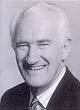 John Young John Young was born in Bristol, England in 1930. His love affair with aviation began after a visit to Sir Alan Cobham's National Aviation Day air show in a farmer's pasture near his home in Chesham. Watching Eighth Air Force B-17s and B-24s operate out of nearby Bovingdon during WWII further fueled Young's interest in aviation and helped develop his historic interest in aviation. Young has painted professionally since 1950. In 1960, after having established a career in illustration for many aviation manufacturers, airlines, air forces, and publishers, Young went freelance to further develop his talents and move towards the world of fine art. Young's work has exhibited in the inaugural and subsequent exhibitions of the Society of Aviation Artists, now known as the Guild of Aviation Artists. Forty-five of Young's original paintings are displayed in the R.A.F. Museum in Hendon and countless others are in private and corporate collections in the U.S. and England. John Young's stature as an aviation artist is unrivalled. He was awarded the Guild Medal of Aviation Artists in 1983, and has in addition won many other prizes. From 1987, John served a term as Chairman of the Guild of Aviation Artists and he is still an active Committee member. Born in 1930, John has painted since 1950, gaining his technical knowledge during service in the Royal Air Force. His work combines a truthful representation of technical subjects with sensitivity to the many moods of sky and land. But it is in his remarkable ability to tell a story through his work that his greatest talent lies. A widely acclaimed book has been published featuring his internationally collected work, and over the years he has established himself as one of the most admired and valued aviation and transport artists in the world. More about John Young |
|
Contact Details |
|
Sign Up To Our Newsletter!
This website is owned by Cranston Fine Arts. Torwood House, Torwoodhill Road, Rhu, Helensburgh, Scotland, G848LE Contact: Tel: (+44) (0) 1436 820269. Email: cranstonorders -at- outlook.com |
 |


