|
|
|
|
|
|
|
|
 |
 |
 |
 |
 |
 |
 |
 |
 |
 |
 |
 |
 |
 |
|
|
Naval DVD Our complete list of naval history DVDs. |
| Navigation | |
| Page 1 of 2 | Page 1 .. Next |
|
|
|
|
|
|
|
|
|
|
|
|
|
|
|
|
|
|
|
|
|
| Navigation | |
| Page 1 of 2 | Page 1 .. Next |
| Text for the above items : |
Scorched Earth - Submarine Warfare In the late 1800s the father of submarines, Mr John Holland, hit upon the idea of powering a submarine with an internal combustion engine and an electric motor. For a hundred years since the first semi-successful attempts during the American Civil War, submarine warfare had been fraught with difficulties and failure. In 1901, the Holland I was launched by the Royal Navy and submarines have been an integral part of the Navy ever since. The Second World War showed the first widespread use of these underwater vessels and their major advantages. Today nuclear submarines roam waters all over the world, for exploration and to keep the peace. This DVD features rare archive footage, stunning 3-D graphics and film of some of the last surviving World War Two submarines. It is a privileged glimpse into the world of submarine warfare. |
Scorched Earth - Kriegsmarine Adolf Hitler had promised his naval commanders that there would be no war in Europe before 1942. Accordingly, plans were laid for the best naval force in the world, but when Hitler precipitated the Second World War in 1939, only a fraction of the necessary ships and submarines were ready. At the outbreak of war Germany did not even possess a single aircraft carrier. The battleships Bismarck and Tirpitz fought famous actions at sea, but the Kriegsmarine was always on the back foot, crippled by superior opponents and strangled by bureaucratic neglect at home. This DVD features rare footage from the British and German archives of the men and ships of the Kriegsmarine in its brief heyday plus innovative maps and graphics, and new footage of the last resting place of the Tirpitz. It also includes computer animation and military analysis from Dr. Simon Trew and Tim Bean of The Royal Military Academy, Sandhurst. |
Grey Wolves - U-Boats 1939 - 1941. For Kapitaen zur See and Fuehrer der U-boote Karl Doenitz the outbreak of war between Germany and the United Kingdom in September 1939 found the submarine arm of the Kriegsmarine unready for conflict. Nevertheless, Doenitzs Grey Wolves were still able to inflict substantial losses on vessels carrying Britains lifeblood. The conflict widened after the occupation of France and its ports gave the submarines direct access to the Atlantic shipping lanes, which in turn led later to a larger arena. This programme depicts the course of the U-boat war in its initial phase in vivid images captured primarily by German cameramen with much being presented to the viewer for the first time. |
Grey Wolves - U-Boats 1942 - 1943. The first six months of 1942 saw the war assume a truly global dimension with the entry of the United States into the conflict. For the U-boat arm, the heavy coastal traffic off the eastern seaboard of the U.S. provided such a fertile hunting ground that the high number of vessels sank led this period to be christened by the submarine crews as the second happy time. The belated introduction of convoy tactics by the US Navy saw U-boat victories off the U.S. coast sink to a low of just three in July 1942. Fuehrer der U-boote Doenitz now set out to exploit the gap in the mid-Atlantic where convoys were beyond the range and protection of allied aircraft. By 1943 the Wolf Packs were inflicting heavy losses on the convoys - the high point of the U-boat campaign in World War II. New footage helps us understand the on-going battle between hunter and hunted above and beneath the cold, grey waters of the North Atlantic - the most decisive theatre of World War II. |
Grey Wolves - U-Boats 1943 - 1945. With the defeat at Stalingrad, the belated need for total mobilization was accepted by Hitler and the slack in German productive capacity was taken up in an attempt to produce the equipment needed to service a wider and much longer war. A new programme for increased production was introduced - 27 Type VII boats a month by the end of 1943. However, it was already too late for the U-boat arm, for the allies had moved to close the gap. Large numbers of long-range aircraft, new radar, new weapons and new tactics served only to raise U-boat losses in the Atlantic after mid 1943. This final chapter of the Grey Wolves war is told with fascinating footage covering all aspects of this story. It ends with film of the one man Biber submarine, and the arrest of Doenitz in 1945 - Hitlers nominated successor and Germanys last Fuehrer! |
Ships on the River Humber - The Port of Hull and King George Dock In 1995 the Humber became the busiest commercial estuary in Britain, capable of dealing with 40,000 ship movements in a year and up to 110 ships in a single day. It plays host to a variety of traffic both commercial and pleasure whether travelling the river or in dock. In this programme we concentrate on the north bank of the Port of Hull and the King George Dock. |
Ships on the River Humber - The Ships of Immingham Dock Filmed in the spring of 1996, we focus on the activities in and around one of Britains busiest docks, Immingham. Wherever possible details are given on the commercial and pleasure vessels that frequent this maritime docking port. |
Ships on the River Humber - Past and Present The Humber estuary has thousands of visitors every year but few are as spectacular as the replica vessel of the Endeavour or the Grand Turk, both seen here. Interspersed with modern ships, we also have an opportunity to see the Sir Winston Churchill and spend time talking to her captain and crew. |
The Battle of Trafalgar - Nelsons Victory We shall have a pell-mell battle... and that is what I want. ADMIRAL NELSON, BEFORE TRAFALGAR, England expects every man to do his duty. Nelsons celebrated signal opened the Battle of Trafalgar, the most famous engagement of the age of sail. Tragically he would not live to enjoy his crowning glory. Cut down by a French sniper at the very moment of triumph, his greatest victory was also destined to be his memorial, for his fleet ended for ever the Emperor Napoleons dream of an invasion of England. Trafalgar - Nelsons Victory, draws extensively on I Remember Nelson and HMS Defiant, two of the most accurate reconstructions of the age of sail ever filmed. Also featuring dramatised re-enacted accounts shot aboard Nelsons famous flagship HMS Victory. The programme includes special 3D graphic images and superb contemporary images to tell the story of a momentous day in naval history. |
Scorched Earth - Carrier Warfare It was in the late summer of 1943 that the American Navy launched its operation to drive the Japanese from the central Pacific. The aircraft carrier was to play a crucial role in its success, for not only did the new carriers give the Americans enormous fire-power, but also, the US shipyards were turning them out at a rate of one per month. This programme tells the dramatic story of the desperate struggle for the Pacific. It features rare archive footage of aircraft carriers in action and examines their function in this vital theatre of war. Carrier Warfare also includes informative 3-D computer graphics. |
Battlefield - The Battle for the Mediterranean. The struggle for control in this vital theatre of World War II gave the conflict some of its most compelling and powerful stories. The great battles between the Italian navy and Britains Royal Navy dominated the seas during the early years of the war as both sides sought to support their land campaigns in Egypt and Africa. At the same time, Britain struggled to maintain its toehold on Malta, dubbed the unsinkable aircraft carried. This episode also explores the story of the war in Greece, which was invaded by the Italians in 1940, the Germans in 1941 and finally by the British in 1944. It looks at the constant fight against the German Luftwaffe, which arrived in the Mediterranean in 1941 and did terrible damage to Allied shipping, resulting in the loss of bases in North Africa. The programme also delves into the fascinating story of Operation Mercury, the German invasion of Crete, the bloody battle which cost 10,000 lives and the story of the fight for the island of Sicily in 1943, which saw the miraculous evacuation of some 100,000 Axis troops. |
Battlefield - The War Against the U-Boats. The convoys that sailed time and again across the Atlantic and Arctic oceans to bring vital supplies back to Britain faced one of the greatest and most deadly threats of the entire war. Hidden deep beneath the waves were the German U-Boats, which wreaked havoc among the Royal and Merchant navies. This desperate struggle - sometimes known as the real battle of Britain - was vital to the outcome of the war. If the U-Boat menace had not been met and defeated, Britain could very easily have been starved into submission. The war against the U-Boats cost 100,000 lives. Nearly 200 Allied warships and 2500 merchant ships were sunk during the fighting in this most terrible theatre of battle. |
Horatio Nelson - Victor at Trafalgar The name of Britains most celebrated naval tactician is inextricable linked to victory. Whether in reference to his famous ship or in memory of his many triumphs, Horatio Nelson lived a charmed existence upon the waves. His life on dry land, however, was to prove less victorious and far more controversial as his personal dealings became something of a scandal. A married man, yet openly flaunting his affair with Lady Emma Hamilton, wife of Lord Hamilton, Nelson caused outrage in both London society and within the higher echelons of the navy. Narrated by Graham McTavish |
The Weather at War - Storm at Sea Naval warfare in various and ever-changing guises has long been a part of the strategy of military forces. Whether the fleets of the Spanish Armada, the longships of invading Vikings or the Arctic convoys during the Second World War, all are at the mercy of Mother Nature. The most complex military plans, troop movements or surprise attacks are rendered impotent should the wind and waves decide today is not your day. In this episode of The Weather At War we journey throughout the ages and analyse the effects the great oceans and seas of the world have had on both attacking forces and their defending enemies including: The Greek and Persian War of 480BC - Julius Caesars invasion of the British Isles in 55BC - Viking attacks during the Dark Ages - The Norman conquests of Britain - The Spanish Armada of 1588 - Battle of Trafalgar 1805 - Naval movements during World War Two. |
U-Boat War They were the only thing that really frightened me. So said the usually steadfast Winston Churchill of the German Navys U-Boat fleet - the dreaded Wolf Pack, which stalked the Atlantic depths, bringing instant death to merchantmen and warship alike. Together with a formidable surface fleet, the U-Boats challenged the Royal Navys traditional supremacy of the oceans, countering Britains strength in numbers with a reign of silent terror. A decade of secret rebuilding had brought forth capital ships like the Scharnhorst, Gneisenau and Prinz Eugen - names to strike fear into any Allied seafarer. However, it was from under the water that the biggest threat was to come. Commanded by Admiral Karl Doenitz, the submarines laid waste to shipping, cutting supply lines and striking from within convoys where Allied escorts dare not use guns. The U-Boat captains were the equivalent of Luftwaffe aces - ruthless, cunning and ice-cool under pressure. Enduring harsh conditions for months on end and working in darkness with no chance of escape, this was truly a war of nerves. There is no margin for error on a submarine, said one captain. You are either alive or dead. On May 4 1945, Doenitz issued orders to cease hostilities. You have fought like lions, he said to his valiant survivors. You are laying down your arms after a heroic fight which knows no equals. The story of that fight is told here using rare archive footage, much of which has been unavailable in the West since World War II. |
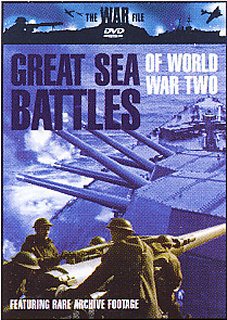
Great Sea Battles of World War Two After the horrors of the Great War, an uneasy peace prevailed. Britannia ruled the waves but for how long? The mid 1930s saw Germany rebuilding her fleets, defying the Versailles Treaty as Hitler planned to encircle Britain with his Kriegsmarine. Within hours of wars declaration, a u-boat had claimed its first victim in an underwater reign of terror that struck the merchantman and warship alike. By April 1940, Germany had sunk one million tons of Allied shipping. The entrance to Mussolinis Italy shifted the balance of power in the Mediterranean. But the Allies changed the course of naval warfare in 1941 when torpedo bombers from HMS Illustrious decimated the Italian fleet at anchor in Taranto, crippling three of their battleships in the first Allied victory since the fall of France. Japan soon learned the lesson - to Americas cost. The surprise attack on Pearl Harbor on 7 December 1941 dwarfed Taranto, with 19 warships and 190 aircraft lost and 22,500 dead. Sea power proved crucial in the Pacific. The battle of Coral Sea was decisive in denying Japan a gateway to Australia and was a naval first - opposing forces launching air attacks 120 miles apart were never in sight of each other. After the US strike on Midway, there was no doubting the tide had turned. Leyte Gulf was the last and greatest sea battle of World War II, leaving the Imperial fleet all but destroyed. The era of the battleship was long gone; the aircraft carrier was now the undisputed master of naval warfare. |
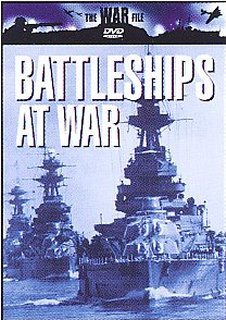
Battleships at War The battleship reigned supreme in naval warfare from the start of the last century to 1945 and, though only the Dardanelles and Jutland provided action in World War One, German rearmament ensured the heavily armed queen of the seas would play a major part in the second conflict. The Royal Navy won early successes: the mighty Graf Spee was scuttled off South America, while half of Raeders fleet was destroyed at Narvik. U-Boats and air power posed a real threat to battleship superiority, as proved by British torpedo bombers at Taranto, but Britain had to destroy Frances capital ships off North Africa to prevent them falling into enemy hands. Admiral Cunninghams fleet, led by HMS Warspite, ensued the Royal Navys mastery of the Mediterranean, crushing Italy at Cape Matapan. Battleships later played a leading role in North Africa, Sicily, Italy and the D-Day landings as floating weapons platforms pounding shore-based enemy positions. The US Navy proved all-powerful in the Pacific, Leyte Gulf leaving the Japanese with only one surviving battleship. Fittingly, the final act of the war took place on USS Missouri as Japan signed the surrender. The Allies had secured ultimate victory - a triumph in which the battleship had played its part. |
Aircraft Carrier When Japan declared war on the United States in 1941, Japans opening gambit - Admiral Nagumos air strike on Pearl Harbor - established the aircraft carrier as the ultimate weapon of naval warfare. In a daring revenge mission, Americas James Doolittle hit back at the heart of Tokyo with a handful of carrier-based bombers before Nagumo met his match in US commander Chester Nimitz at Midway. The carriers development is traced from World War 2 through Korea and Vietnam to the Falklands, where a combination of vertical take-off strike planes, helicopters and missile systems proved the modern carrier still reigned supreme. |
Great German Battleships of World War Two This Fascinating volume, using archive footage, stills and interviews with German ex-Naval officers and seamen, concentrates on the exploits of the famous Bismarck. This is followed by an in depth portrait of the mightiest and most famous German warships of World War Two, including the big sea battles they encountered. |
The Battle of Midway A ferocious battle fought between the Japanese and United States Carrier Fleets, which proved to be one of the most decisive victories and a major turning point for America in the war in the Pacific. The Japanese lost four of their powerful carriers and from that point on, no longer able to risk a major fleet versus fleet action, went on the defensive. By the time they had recovered enough to rebuild their fleet, American power had mobilized into the unstoppable force that Japan had so feared. |
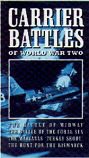
Carrier Battles of World War Two An account of all the major fleet versus fleet actions during the conflict, when the worlds largest navies sent their flagship aircraft carriers and their carrier borne aircraft into battle with one another. Most of these battles were fought with neither side ever coming into visual contact with each other. Battles fought between the allied British and American carriers against the Japanese Imperial Fleet. Battles such as the Coral Sea, Midway and the Marianas Turkey Shoot. Also included are the battles fought by the British carriers against the German battleship Bismarck along with the Japanese Kamikaze attacks on British and American carriers. |
| Navigation | |
| Page 1 of 2 | Page 1 .. Next |
|
Contact Details |
|
Sign Up To Our Newsletter!
This website is owned by Cranston Fine Arts. Torwood House, Torwoodhill Road, Rhu, Helensburgh, Scotland, G848LE Contact: Tel: (+44) (0) 1436 820269. Email: cranstonorders -at- outlook.com |
 |