|
|
|
|
|
|
|
|
 |
 |
 |
 |
 |
 |
 |
 |
 |
 |
 |
 |
 |
 |
|
|
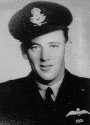
Flight Lieutenant John Bisley
Fl Lt John Bisley DFC Royal Australian Air Force, fighter pilot joined the RAAF in 1940 and was posted to England where he joined 122 Sqn RAF. On 29 March 1942 he flew a Spitfire off HMS Eagle and landed at Malta as part of operation Picket II. On 5 April 1942 Plt Off John Bisley was flying one of three Mk VB Spitfires of 126 Sqn RAF who intercepted 100 German aircraft attacking Malta. He was then attacked by 12 Me109s from JG-53 who took it in turns to attack two at a time to try and shoot him down and he was hit by 55 cannon shells. Fl Lt John Bisley DFC said I would flick the aircraft over, standing it on its wingtip just 5 or 10 feet above the water and pulll into a tight turn go part way then flick back the other way. He then made a wheels up landing at Ta Kali and watched from a slit trench as two of the 109s then strafed what was left of his Spitfire. This was the intense aerial air battles over Valetta in April 1942. Between the summer of 1940 and the end of 1942, Malta became one of the most bombed places on earth. The RAFs desperate fight to retain control of the diminutive Mediterranean island, and the defiant courage of the people of Malta, is one of the epic stories of World War Two. Bisley was awareded the DFC on the 7th July 1942. From April to early July, Bisley shot down a Junkers Ju88, a Ju87, two Me109s a Macchi MC202 and a half share in a Savoia-Marchetti SM.84. He returned back the England and then to Australia in August 1942 joinming 452 Sqn in Darwin flying Spitfire MKVs. On 20 June 1943, Flight Lieutenant John Henry Eric Bisley (402720) shot down a Nakajima KI-49 (Helen) (Squadron Leader R. S. MacDonald, and Flight Lieutenant D. Evans also each shot down a Japanese Helen or Sally.) John Bisley became a test and ferry pilot from 1944 and then a instructor at the Central Flying School. He left the Ryal Australian Air Force in August 1945 and after the war established an import export business.
|
Items Signed by Flight Lieutenant John Bisley |
  | Spitfires Over Darwin by Robert Taylor. (B) SOLD OUT | Mark Vc tropicalized Spitfires of No 1 wing RAAF returning from a Scramble over the city of Darwin in early 1943. The bombing of Darwin by Japanese aircraft shortly before 10:00 am on the morning of February 19, 1942, brought the northern region of ...... | NOT AVAILABLE |
| | Spitfires Over Darwin by Robert Taylor. (C) SOLD OUT | Mark Vc tropicalized Spitfires of No 1 wing RAAF returning from a Scramble over the city of Darwin in early 1943. The bombing of Darwin by Japanese aircraft shortly before 10:00 am on the morning of February 19, 1942, brought the northern region of ...... | NOT AVAILABLE |
Packs with at least one item featuring the signature of Flight Lieutenant John Bisley |
| Squadrons for : Flight Lieutenant John Bisley | ||
| A list of all squadrons known to have been served with by Flight Lieutenant John Bisley. A profile page is available by clicking the squadron name. | ||
| Squadron | Info | |
Country : UK Founded : 1st January 1918 Fate : Disbanded 1st April 1946 Bombay Victuri volamus - We fly to conquer | No.122 Sqn RAF Flew Mustangs from January 1944. | |
Country : UK Founded : 1st February 1918 Fate : Disbanded 10th March 1946 Persian Gulf Foremost in attack | No.126 Sqn RAF Flew Mustangs from December 1944. | |
Country : Australia Founded : 8th April 1941 Fate : Disbanded 21st June 1942 Click the name above to see prints featuring aircraft of No.452 Sqn RAAF | No.452 Sqn RAAF Full profile not yet available. | |
| Aircraft for : Flight Lieutenant John Bisley | |||
| A list of all aircraft associated with Flight Lieutenant John Bisley. A profile page including a list of all art prints for the aircraft is available by clicking the aircraft name. | |||
| Squadron | Info | ||

Manufacturer : Supermarine Production Began : 1936 Retired : 1948 Number Built : 20351 | Spitfire Royal Air Force fighter aircraft, maximum speed for mark I Supermarine Spitfire, 362mph up to The Seafire 47 with a top speed of 452mph. maximum ceiling for Mk I 34,000feet up to 44,500 for the mark XIV. Maximum range for MK I 575 miles . up to 1475 miles for the Seafire 47. Armament for the various Marks of Spitfire. for MK I, and II . eight fixed .303 browning Machine guns, for MKs V-IX and XVI two 20mm Hispano cannons and four .303 browning machine guns. and on later Marks, six to eight Rockets under the wings or a maximum bomb load of 1,000 lbs. Designed by R J Mitchell, The proto type Spitfire first flew on the 5th March 1936. and entered service with the Royal Air Force in August 1938, with 19 squadron based and RAF Duxford. by the outbreak of World war two, there were twelve squadrons with a total of 187 spitfires, with another 83 in store. Between 1939 and 1945, a large variety of modifications and developments produced a variety of MK,s from I to XVI. The mark II came into service in late 1940, and in March 1941, the Mk,V came into service. To counter the Improvements in fighters of the Luftwaffe especially the FW190, the MK,XII was introduced with its Griffin engine. The Fleet Air Arm used the Mk,I and II and were named Seafires. By the end of production in 1948 a total of 20,351 spitfires had been made and 2408 Seafires. The most produced variant was the Spitfire Mark V, with a total of 6479 spitfires produced. The Royal Air Force kept Spitfires in front line use until April 1954. | ||
About our Signatures Search for more Signatures
|
Contact Details |
|
Sign Up To Our Newsletter!
This website is owned by Cranston Fine Arts. Torwood House, Torwoodhill Road, Rhu, Helensburgh, Scotland, G848LE Contact: Tel: (+44) (0) 1436 820269. Email: cranstonorders -at- outlook.com |
 |