|
|
|
|
|
|
|
|
 |
 |
 |
 |
 |
 |
 |
 |
 |
 |
 |
 |
 |
 |
|
|
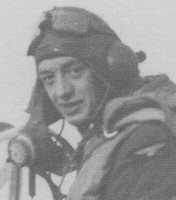
Flight Lieutenant Sir Alan Smith DFC (deceased)
An RAFVR pilot Alan Smith completed his conversion to Spitfires and was posted to 610 Squadron in October 1940. and then to 616 Squadron in December 1940, Alan Smith often flew as wingman to Douglas Bader and would have been flying in that position on the fateful August 9th had he not been suffering from a head cold and instead set off for London to buy a uniform to match his newly granted commission. Johnnie Johnson described him as the perfect No 2. He usually flew in the same section with Bader, Cocky Dundas and Johnson. Alan Smith was impressed not only by Baders ability to inspire his pilots, but also his willingness to protect them. He remembers the RAF police pouncing on the squadron to see if anyone was using aviation fuel in their cars and how Bader sent them packing in no uncertain terms! In November 1941 Alan Smith was posted to a training role but returned to operations in November 1942 in North Africa. After completing this tour he returned to instructing latterly in the USA. By the end of the war Smith had been awarded the DFC and Bar and had recorded five confirmed victories. After the war he had a very successful career in the textile industry. He died on 1st March 2013.
|
Items Signed by Flight Lieutenant Sir Alan Smith DFC (deceased) |
  | Inspiration by John Young. SOLD OUT | Official limited edition print of the 60th Anniversary of the Douglas Bader Foundation. Douglas Bader (D-B) leading Dogsbody Section, 616 Squadron, including Johnnie Johnson (YQ-E) , Cocky Dundas (YO-A) and Jeff West (YQ-H) on his final operational...... | NOT AVAILABLE |
Packs with at least one item featuring the signature of Flight Lieutenant Sir Alan Smith DFC (deceased) |
| Squadrons for : Flight Lieutenant Sir Alan Smith DFC (deceased) | ||
| A list of all squadrons known to have been served with by Flight Lieutenant Sir Alan Smith DFC (deceased). A profile page is available by clicking the squadron name. | ||
| Squadron | Info | |
Country : UK Founded : 10th February 1936 Fate : Disbanded 10th March 1957 County of Chester (Auxiliary) Alifero tollitur axe ceres - Ceres rising in a winged car | No.610 Sqn RAF 610 squadron was formed AT Hooton Park, Wirral in Cheshire on 10 February 1936 as one of the Auxiliary Air Force squadrons equipped with the light bomber the Hawker Hart. In May 1938 610 Squadron aircraft were upgraded to the new Hawker Hind. On 1 January 1939 the squadron role was changed into that of a fighter squadron, and on the outbreak of war in September 1939, he Squadron began receiving the new Hawker Hurricane. By the end of that same month it was flying the Supermarine Spitfire. During the Battle of Britain 610 Squadron was attached to No. 3 Group and was initially based at RAF Gravesend but moved to Biggin Hill before the German offensive began and was one of the units bearing the brunt of German attacks. It moved to RAF Acklington for the rest and recuperation at the end of August, having sustained severe casualties. During the Battle of Britain the squadron included Pilot Officer, later Squadron Leader, Constantine Pegge. In 1941, the squadron moved south to RAF Tangmere where it became part of the Tangmere wing, a three squadron wing under the command of Douglas Bader. 610 Squadron remained based in the UK until 1945, when it moved to the continent to provide fighter cover as the allies entered Germany. 610 Squadron was disbanded before the end of the war at RAF Warmwell in March 1945. | |
Country : UK Founded : 1st November 1938 Fate : Disbanded 10th March 1957 South Yorkshire (Auxiliary) Nulla rosa sine spina - No rose without thorns | No.616 Sqn RAF 616 squadron was formed at Doncaster on 1st November 1938 as the last of the Auxiliary Squadrons. Formed initially as a bomber squadron equipped with Hawker Hinds, it was re-equipped with Gloster Gauntlets in June 1939 and transferred to Fighter Command. The squadrons first Spitfires arrived in late October. 616 first saw action and claimed its first victories whilst covering the evacuation from Dunkirk in May 1940. Returning to Yorkshire, the squadron claimed further enemy victims with 15th August standing out as a memorable day. 616 intercepted a large force of unescorted German bombers off the Yorkshire coast and claimed eight enemy aircraft destroyed. They moved to Kenley to join 11 Group at the height of the Battle of Britain, and destroyed 15 aircraft and claimed a further 15 as probables or damaged. During February 1941, 616 joined the Tangmere Wing led by Wg Cdr Douglas Bader. Flying Spitfire II fighters, they flew circus and ramrod sweeps over Northern France, and re-equipped with Spitfires Vb during July 1941. For the next two years 616 continued as a front line fighter squadron and was heavily engaged during the Dieppe expedition and later flying beach-head patrols on D-Day. In July 1944, 616 re-equipped with Gloster Meteor jet fighter thus becoming the first and only Allied squadron to operate jet aircraft in World War II. The squadron destroyed a number of V1 flying bombs whilst operating from Manston before joining the 2nd Tactical Air Force. In January 1945, 616 moved to the continent and operated in the ground attack role before being disbanded at Lubeck on 29th August. The squadron was re-formed at Finningley on 31st July 1946 equipped with Mosquito NF XXX night fighters which were replaced with Meteor F 3 day fighters a few months later. 616 Squadron Royal Auxiliary Air Force was finally disbanded at RAF Worksop on 10th March 1957 whilst equipped with Meteor F8 aircraft. | |
| Aircraft for : Flight Lieutenant Sir Alan Smith DFC (deceased) | |||
| A list of all aircraft associated with Flight Lieutenant Sir Alan Smith DFC (deceased). A profile page including a list of all art prints for the aircraft is available by clicking the aircraft name. | |||
| Squadron | Info | ||

Manufacturer : Supermarine Production Began : 1936 Retired : 1948 Number Built : 20351 | Spitfire Royal Air Force fighter aircraft, maximum speed for mark I Supermarine Spitfire, 362mph up to The Seafire 47 with a top speed of 452mph. maximum ceiling for Mk I 34,000feet up to 44,500 for the mark XIV. Maximum range for MK I 575 miles . up to 1475 miles for the Seafire 47. Armament for the various Marks of Spitfire. for MK I, and II . eight fixed .303 browning Machine guns, for MKs V-IX and XVI two 20mm Hispano cannons and four .303 browning machine guns. and on later Marks, six to eight Rockets under the wings or a maximum bomb load of 1,000 lbs. Designed by R J Mitchell, The proto type Spitfire first flew on the 5th March 1936. and entered service with the Royal Air Force in August 1938, with 19 squadron based and RAF Duxford. by the outbreak of World war two, there were twelve squadrons with a total of 187 spitfires, with another 83 in store. Between 1939 and 1945, a large variety of modifications and developments produced a variety of MK,s from I to XVI. The mark II came into service in late 1940, and in March 1941, the Mk,V came into service. To counter the Improvements in fighters of the Luftwaffe especially the FW190, the MK,XII was introduced with its Griffin engine. The Fleet Air Arm used the Mk,I and II and were named Seafires. By the end of production in 1948 a total of 20,351 spitfires had been made and 2408 Seafires. The most produced variant was the Spitfire Mark V, with a total of 6479 spitfires produced. The Royal Air Force kept Spitfires in front line use until April 1954. | ||
About our Signatures Search for more Signatures
|
Contact Details |
|
Sign Up To Our Newsletter!
This website is owned by Cranston Fine Arts. Torwood House, Torwoodhill Road, Rhu, Helensburgh, Scotland, G848LE Contact: Tel: (+44) (0) 1436 820269. Email: cranstonorders -at- outlook.com |
 |