|
|
|
|
|
|
|
|
 |
 |
 |
 |
 |
 |
 |
 |
 |
 |
 |
 |
 |
 |
|
|
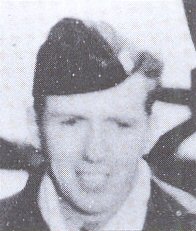
Brigadier General Everett W Holstrom (deceased)
I was Captain and pilot of a B-25 that met stiff resistance from Japanese fighter opposition. Our guns and turrets were inoperative. We flew on and bailed out 40 miles south west of Shinghsi. I landed by parachute in a driving rainstorm about 10.00 p.m. On the third day I was picked up by Chinese guerrillas who escorted me through free China. The rest of my crew were one day behind me! I later spent 20 years in Strategic Air Command, and flew and commanded B-47s, B-52s and the worlds first supersonic bomber - the B-58. - Everett Holstrom died 2nd December 2000.
|
Items Signed by Brigadier General Everett W Holstrom (deceased) |
  | Doolittle Raiders by Robert Taylor. SOLD OUT | Doolittle Raiders take their B-25 bombers down to very low level and head for China after delivering their surprise attack on the industrial and military targets in and around Tokyo on April 18, 1942. The sixteen-ship mission, led by volunteer crews,...... | NOT AVAILABLE |
| | Doolittle Raiders by Robert Taylor (AP) SOLD OUT | Doolittle Raiders take their B-25 bombers down to very low level and head for China after delivering their surprise attack on the industrial and military targets in and around Tokyo on April 18, 1942. The sixteen-ship mission, led by volunteer crews,...... | NOT AVAILABLE |
  | Tokyo Bound by Nicolas Trudgian. Price : £280.00 | On April 18, 1942, under the leadership of Lieutenant Colonel Jimmy Doolittle, a small force of B-25 Mitchell light bombers set forth on one of the most audacious air raids of World War II. Launching in a rough sea from the heaving deck of the carr...... | |
| | Tokyo Bound by Nicolas Trudgian (AP) SOLD OUT | On April 18, 1942, under the leadership of Lieutenant Colonel Jimmy Doolittle, a small force of B-25 Mitchell light bombers set forth on one of the most audacious air raids of World War II. Launching in a rough sea from the heaving deck of the carr...... | NOT AVAILABLE |
| | Tokyo Bound by Nicolas Trudgian (B) Price : £290.00 | On April 18, 1942, under the leadership of Lieutenant Colonel Jimmy Doolittle, a small force of B-25 Mitchell light bombers set forth on one of the most audacious air raids of World War II. Launching in a rough sea from the heaving deck of the carri...... |
Packs with at least one item featuring the signature of Brigadier General Everett W Holstrom (deceased) |
| Aircraft for : Brigadier General Everett W Holstrom (deceased) | |||
| A list of all aircraft associated with Brigadier General Everett W Holstrom (deceased). A profile page including a list of all art prints for the aircraft is available by clicking the aircraft name. | |||
| Squadron | Info | ||

| Hustler B-58 | ||
| Mitchell On April 18, 1942, Lt. Col. James H. Doolittle led a group of 16 B-25 bombers on a carrier-launched raid on industrial and military targets in Japan. The raid was one of the most daring missions of WW II. Planning for this secret mission began several months earlier, and Jimmy Doolittle, one of the most outstanding pilots and leaders in the United States Army Air Corps was chosen to plan, organize and lead the raid. The plan was to get within 300 or 400 miles of Japan, attack military and industrial targets in Tokyo, Osaka, and Kobe shortly after nightfall, and then fly on to a dawn landing at secret airfields on the coast of China. The twin engine B-25 Mitchell bomber was selected by Doolittle for the mission and practice indicated that it should be possible to launch these aircraft from a carrier deck with less than 500 feet of runway. On April 2, 1942 the USS Hornet and a number of escorts set sail from Alameda, California with the 16 B-25s strapped to its deck. This task force rendezvoused with another including the USS Enterprise, and proceeded for the Japanese mainland. An element of surprise was important for this mission to succeed. When the task force was spotted by a Japanese picket boat, Admiral Halsey made the decision to launch the attack earlier than was planned. This meant that the raiders would have to fly more than 600 miles to Japan, and would arrive over their targets in daylight. It also meant that it would be unlikely that each aircraft would have sufficient fuel to reach useable airfields in China. Doolittle had 50 gallons of additional fuel stowed on each aircraft as well as a dinghy and survival supplies for the likely ditchings at sea which would now take place. At approximately 8:00 AM the Hornets loudspeaker blared, Now hear this: Army pilots, man your planes! Doolittle and his co-pilot R.E. Cole piloted the first B-25 off the Hornets deck at about 8:20 AM. With full flaps, and full throttle the Mitchell roared towards the Hornets bow, just barely missing the ships island superstructure. The B-25 lifted off, Doolittle leveled out, and made a single low altitude pass down the painted center line on the Hornets deck to align his compass. The remaining aircraft lifted off at approximately five minute intervals. The mission was planned to include five three-plane sections directed at various targets. However, Doolittle had made it clear that each aircraft was on its own. He insisted, however, that civilian targets be avoided, and under no circumstances was the Imperial Palace in Tokyo to be bombed. About 30 minutes after taking off Doolittles B-25 was joined by another piloted by Lt. Travis Hoover. These two aircraft approached Tokyo from the north. They encountered a number of Japanese fighter or trainer aircraft, but they remained generally undetected at their low altitude. At 1:30 PM the Japanese homeland came under attack for the first time in the War. From low altitudes the raiders put their cargoes of four 500 pounders into a number of key targets. Despite antiaircraft fire, all the attacking aircraft were unscathed. The mission had been a surprise, but the most hazardous portion of the mission lay ahead. The Chinese were not prepared for the raiders arrival. Many of the aircraft were ditched along the coast, and the crews of other aircraft, including Doolittles were forced to bail out in darkness. There were a number of casualties, and several of the raiders were caught by Japanese troops in China, and some were eventually executed. This painting is dedicated to the memories of those airmen who made the ultimate sacrifice for their country and the thousands of innocent Chinese citizens which were brutally slaughtered as a reprisal for their assistance in rescuing the downed crews. | ||
| Stratofortress The Boeing B-52 Stratofortress has played a major role in Americas defense for nearly forty years. In his dramatic painting appropriately entitled B-52s: They Keep On Ticking, aviation artist Stan Stokes depicts an early big-tailed B-52B and a more contemporary B-52G which saw service during Operation Desert Storm. The origins of the development of the B-52 begins way back in the early 1940s. All major aircraft companies were interested in developing the first truly intercontinental bomber. Shortly after WW II the Convair XB-36 and the Northrop XB-35 were developed, and both had intercontinental range. However, neither of these aircraft were capable of penetrating deep into Soviet airspace, and defense planners in the early 1950s presumed that the Soviets would be our prime adversaries for years to come. In 1946 the Air Force issued a requirement for its next generation of strategic bombers. Required was a range of at least 5,000 miles with a minimum 10,000 pound bomb load, a top speed in excess of 450 MPH and an operational ceiling of at least 40,000 feet. Boeing entered this competition with the XB-52 which incorporated six turboprop engines. Part way into prototype development, Boeings designers decided to scrap this design in favor of a swept wing jet powered aircraft. The first XB-52 was rolled out in November of 1951. One major change in the prototype was a complete redesign of the forward fuselage to allow the pilots to sit side-by-side. The B-52B was the first true production model of the Stratofortress. It became operational in 1955 with the Strategic Air Command. On January 16, 1957 SAC demonstrated the amazing capabilities of the B-52 with a non-stop around the world flight covering over 24,000 miles in 45 hours and 19 minutes. The B-52B was phased out in the mid 1960s. The B-52C was the first of these aircraft to be painted gloss white on its entire underside to reflect the heat from nuclear blasts. The C remained in service until 1971. The B-52D saw significant service in Vietnam. Many of these models were modified to carry up to as many as 108 conventional bombs. During a major offensive strike at Hanoi in December 1972 a total of 729 B-52 sorties were flown. Only 15 aircraft were lost, despite the fact that Hanoi was heavily protected with SAMs and anti-aircraft batteries. The B-52G was the first of the short tail models. The manned rear gun turret was removed on these models, and the fuel capacity was significantly increased. The G model was the first of the B-52s to carry cruise missiles, a development which significantly lengthened the useful service life of this aircraft. The B-52G is, like its predecessors, a very large aircraft with a wingspan in excess of 185 feet, and a maximum take off weight of 488,000 pounds. With a range in excess of 7,000 miles and a maximum speed of 634 MPH, the Gs were successfully utilized in the Gulf War, and no doubt will continue to see service for many more years into the future. The B-52 is clearly one of the most unique of all post-WW II military aircraft, and it is interesting to note that it is one of only a very few aircraft designs which is older than most of the pilots who fly it. | ||
About our Signatures Search for more Signatures
|
Contact Details |
|
Sign Up To Our Newsletter!
This website is owned by Cranston Fine Arts. Torwood House, Torwoodhill Road, Rhu, Helensburgh, Scotland, G848LE Contact: Tel: (+44) (0) 1436 820269. Email: cranstonorders -at- outlook.com |
 |