|
|
|
|
|
|
|
|
 |
 |
 |
 |
 |
 |
 |
 |
 |
 |
 |
 |
 |
 |
|
AMERICAN CIVIL WAR PRINTS SECTION
YOU ARE VIEWING: MILITARY PRINTS --> AMERICAN CIVIL WAR PRINTS
| Navigation | |
| Page 2 of 5 | Previous .. Page 2 .. Next |
| Military Art Collecton - American Civil War |
|
|
|
|
|
|
|
|
|
|
|
|
|
|
|
|
|
|
|
|
|
| Navigation | |
| Page 2 of 5 | Previous .. Page 2 .. Next |
| Text for the above items : |
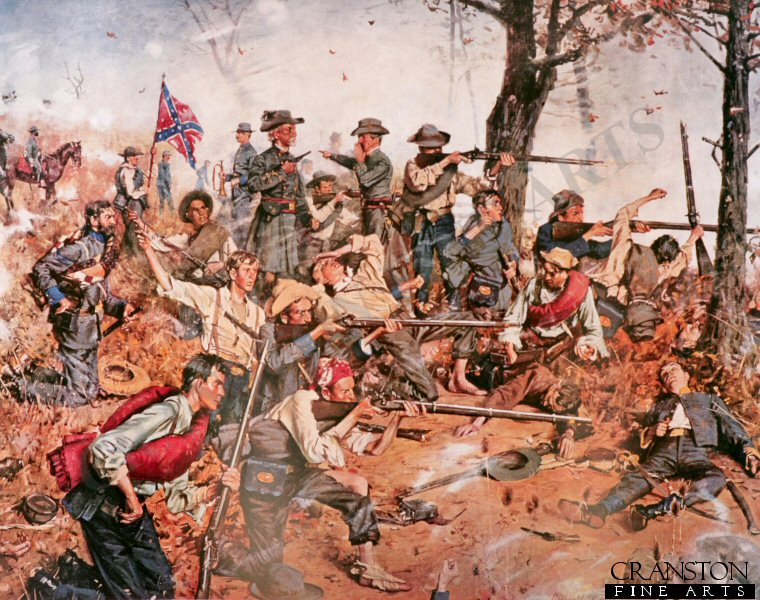
Holding the Line at All Hazards by Gilbert Gaul. No text for this item |
Portrait of General Lee by Geoff Lea. No text for this item |
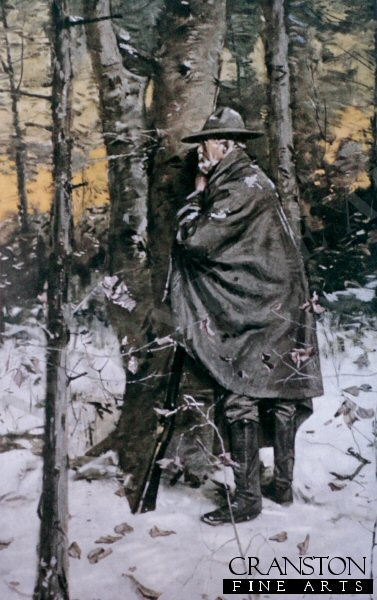
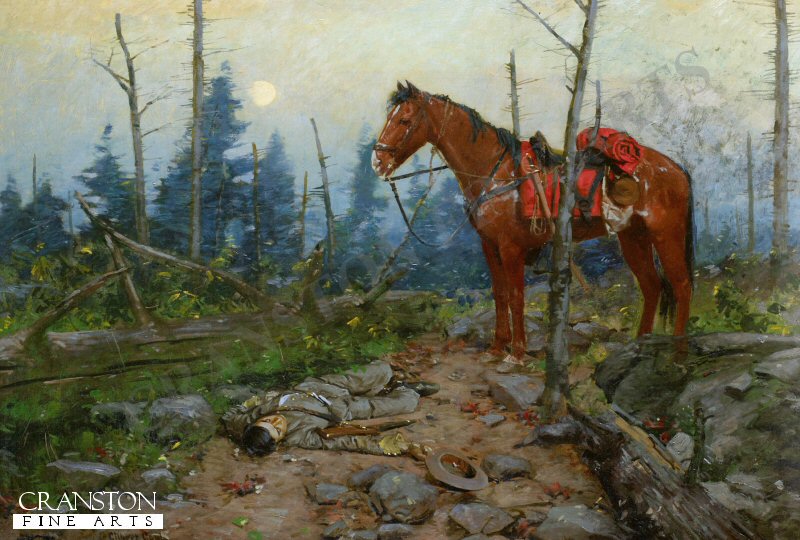
The Picket by Gilbert Gaul. Dr. Gilbert Gaul frequently went hunting with his good friend up around Fall Creek Falls state park. On one particular day, they were hunting deer and tracking for some time his friend stopped and rested a while. He leaned his gun against a tree and stopped to take a short break. Dr. Gaul, being an exceptional artist, saw a moment to capture an incredible image. There at that site, pulled out a piece of paper and made an outline sketch of his friend. Later, after he returned to his office, he sat down and painted the Pickett. The sole Confederate Picket. The irony of this painting is that his friends name was Ulysses Simpson Grant Walling, and is the Great Great Grandfather of Rhonda Morgan who we would llike to thank for sharing this information. |
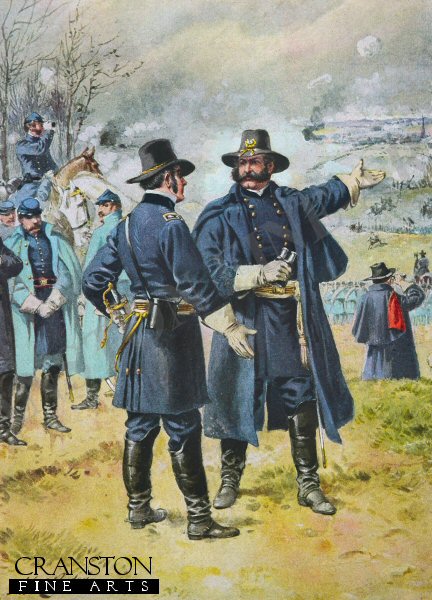
Burnside at Fredericksburg - December 13th, 1862 by Henry Alexander Ogden (PC) The Battle of Fredericksburg, fought from December 11th to 15th, 1862 was a significant skirmish in the Civil War. Union General Ambrose Burnside faced Confederate General Robert E. Lee. Burnsides plan involved a direct assault on Lee’s entrenched positions along Maryes Heights, but his forces encountered fierce resistance and suffered heavy casualties. The battle resulted in a devastating defeat for the Union, with Burnsides leadership and tactics heavily criticized which would lead to his eventual replacement. |
Ulysses Simpson Grant by William Meijer. Inspired by the heroism of Ulysses S Grant, Robert E Lee, David G Farragut and JEB Stuart the artist William Meijer has created four portraits. Each portrait has been painstakingly researched in order to create an authentic likeness of each sitter and to honor the achievements of these great men. |
Confederate Bugler by Chris Collingwood. No text for this item |
Christmas Day In Camp by Gilbert Gaul (PC) Part of the classic collection. |
Grey Cover for Grey Rifles by Chris Collingwood. Confederate skirmishers of the 19th Virginia Volunteers take over behind a farmhouse during the early stages of the war 1861. |
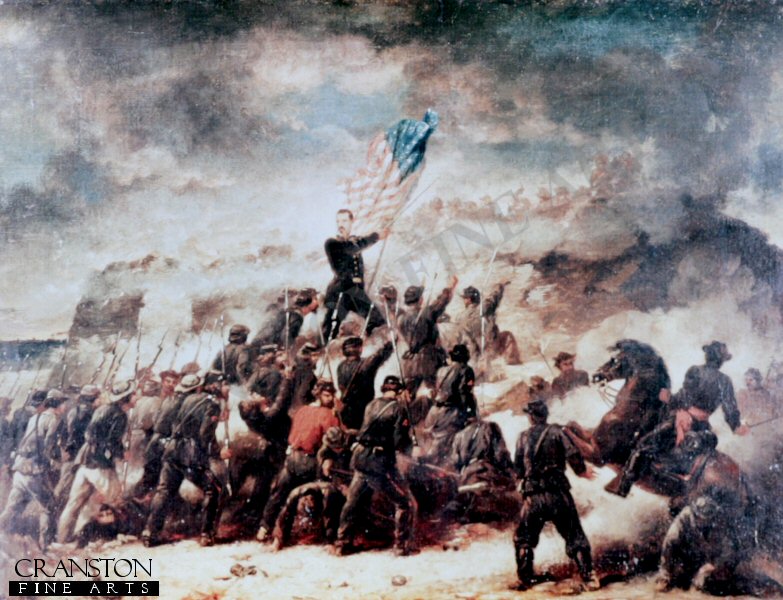
Union Assault on Confederate Works by Winner. No text for this item |
First Sergeant by Keith Rocco. Figure study of a veteran Federal cavalryman. |
Hamptons Charge at Brandy Station by Clyde Heron. No text for this item |
Sergeant 23rd Pennsylvania Infantry Zouaves 1863 by Jim Lancia. No text for this item |
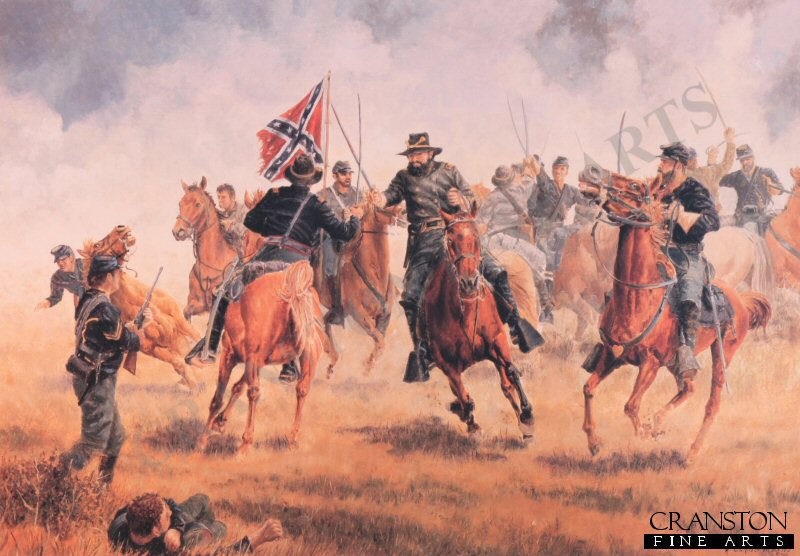
Major General George Armstrong Custer by Chris Collingwood. Major General George George Armstrong Custer by Chris Collingwood. At the Battle of Five Forks, April 1865. |
The Last Full Measure, 1st Minnesota Regiment at Gettysburg by Keith Rocco. General Winfield Scott Hancock, commander of the Union Second Corps was trying to avert a disaster on the Union center. The exposed Third Corps was overrun and fleeing the battlefield, with the victorious Confederates in pursuit. This breakthrough opened an avenue to the Union rear that threatened the whole army. Hancock needed men to buy him time to bring reinforcements up to plug the gap in the Federal line. The general observed a body of men lying in a slight hollow, just behind the crest of Cemetery Ridge, to the left of the cemetery. He spurred his horse to this position. Hancock spied Colonel William Colvills 1st Minnesota Infantry, 1st brigade, 2nd division, Second Corps. These men were in reserve, but they had been watching the battle unfold through the dense clouds of gunsmoke that clung to the ground on this sultry summer day. The 1st Minnesota was understrength, shouldering but 262 muskets this day. The regiment had been bloodied on every field, from First Bull Run through Chancellorsville, and was further weakened by detachments. This single, undermanned regiment was the only Union force at hand. My God! exclaimed Hancock when he saw them, Are these all the men we have here! What regiment is this? he demanded. First Minnesota, replied Colvill. Charge those lines, Hancock ordered, pointing in the direction of the Peach Orchard and Plum Run. Hancock and Colvill looked at each other, Hancock knowing what he had ordered and Colvill realizing both the necessity and the grim implications of it. Forward, double-quick, Colvill barked to his men. With bayonets fixed, and rifles at right-shoulder shift, the 1st Minnesota charged down the slope toward Cadmus Wilcoxs Confederate brigade, which was then reforming its lines in the marshy terrain along Plum Run. The Minnesotans advanced along a hundred yard front, with both flanks in the air. Losing men at every step, they continued forward. As the Federals neared the enemy, they leveled their bayonets and charged. The ferocity of this assault stunned the Confederates, driving back the first line of defenders, staggering their advance. Then, as both lines steadied, they exchanged volleys at a distance of thirty yards. Though his line continued to melt away, Colvills Minnesotans traded their lives for the precious minutes Hancock required. In just fifteen minutes it was over. Only 47 men, commanded by a sergeant, rallied to the 1st Minnesotas banner. Two hundred fifteen of their comrades, all of their officers, including Colvill, lay on the field. |
Confederate Officer, 15th Alabama Infantry Regiment 1863 by Mark Churms. Colonel William C Oates leads his regiment up the slopes of Little Round Top to attack the left flank of the Union army on the second day of fighting at the Battle of Gettysburg. |
The Battle of Shiloh - April 6th and 7th, 1862 by Henry Alexander Ogden The Battle of Shiloh was a significant early Civil War engagement in Tennessee, resulting in a Union victory that helped secure control of the western theater but also revealed the wars brutal intensity with heavy casualties on both sides. |
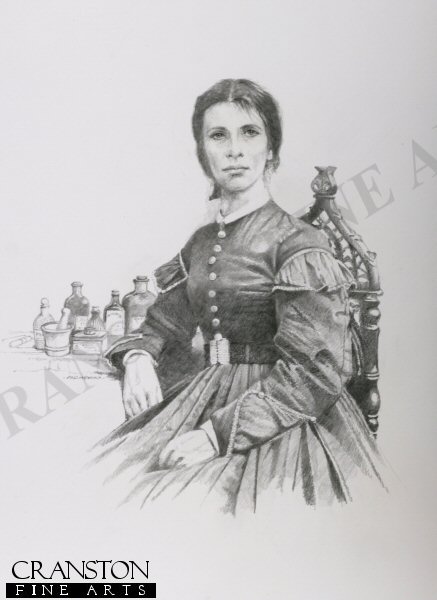
A Mother of the American Civil War by Chris Collingwood (P) No text for this item |
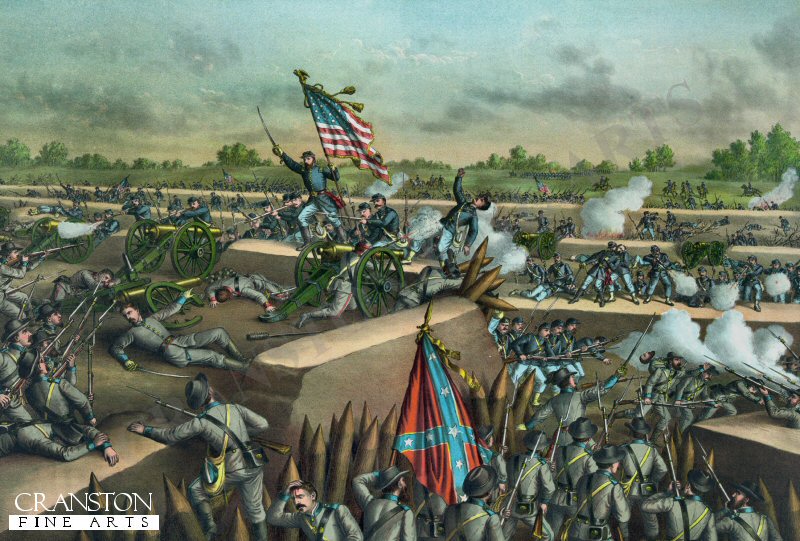
The Fall of Petersburg - April 2nd 1865 by Louis Kurz The Third Battle of Petersburg (also known as the fall of Petersburg) saw Union General Ulysses S. Grant break the Confederate defences around Petersburg. Virginia, held by General Robert E. Lee's forces. This victory set the stage for the surrender of the Army of Northern Virginia at Appomattox Court House on April 9th 1865. |
Faithful Unto Death by Gilbert Gaul No text for this item |
The Battle of Antietam - September 17th 1862 by Louis Kurz The Battle of Antietam, fought near Sharpsburg, Maryland was the bloodiest single-day battle in American history. It was marked by intense and brutal combat, with significant casualties on both sides, totalling around 22,000. Although neither side achieved a decisive victory, the battle halted General Robert E. Lee's invasion of the North. |
69th New York Infantry Company K by Jim Lancia. Zouave company of the Irish Brigade 1861 |
| Navigation | |
| Page 2 of 5 | Previous .. Page 2 .. Next |
|
Contact Details |
|
Sign Up To Our Newsletter!
This website is owned by Cranston Fine Arts. Torwood House, Torwoodhill Road, Rhu, Helensburgh, Scotland, G848LE Contact: Tel: (+44) (0) 1436 820269. Email: cranstonorders -at- outlook.com |
 |