|
|
|
|
|
|
|
|
 |
 |
 |
 |
 |
 |
 |
 |
 |
 |
 |
 |
 |
 |
|
ENGLISH CIVIL WAR PRINTS SECTION
YOU ARE VIEWING: MILITARY PRINTS --> ENGLISH CIVIL WAR PRINTS
| Navigation | |
| Page 1 of 2 | Page 1 .. Next |
| Military Art Collecton - English Civil War |
|
|
|
|
|
|
|
|
|
|
|
|
|
|
|
|
|
|
|
|
|
| Navigation | |
| Page 1 of 2 | Page 1 .. Next |
| Text for the above items : |
Battle of Worcester, 3rd September 1651 by Chris Collingwood. Charles II rides out to lead his army. Including many Scots who fought on his side. |
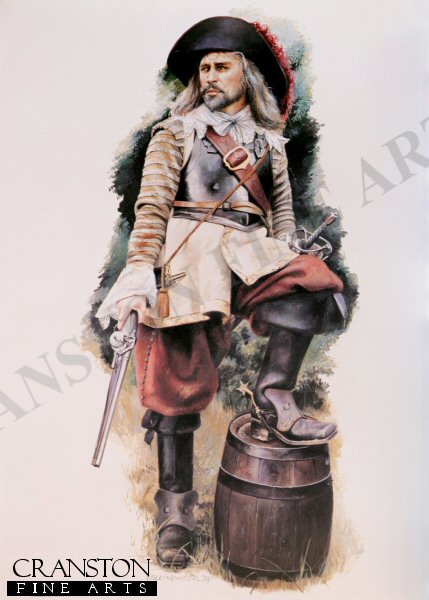
East European Mercenary by Chris Collingwood. Part of a series of seven English Civil War uniform stuies. |
Charles I on His Way to Execution by Ernest Crofts. No text for this item |
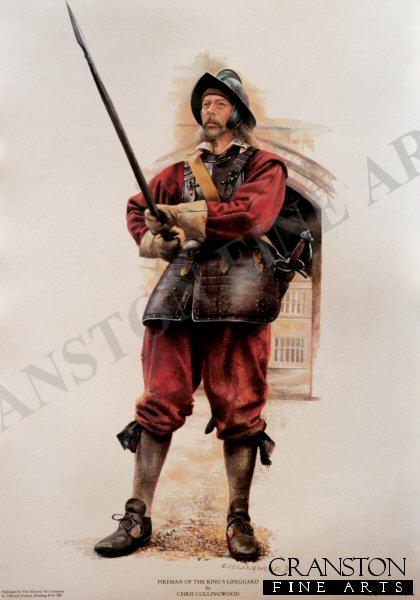
Pikeman of the Kings Life Guard by Chris Collingwood. Part of a series of seven English Civil War uniform stuies. |
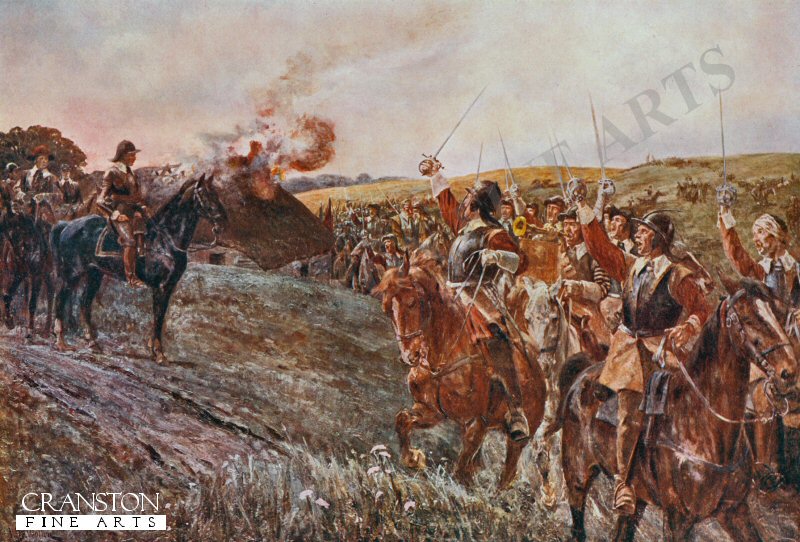
For Sack and Plunder by Chris Collingwood. A once noble household becomes the focus of the common mans greed, thwarted only by the timely arrival of a troop of Kings Horse. |
Cromwell at the Sign of the Blue Boar by Ernest Crofts. Cromwell questioned as a prisoner. Painted in 1883, this painting hangs in the Dudley Art Gallery. |
Oliver Cromwell by Chris Collingwood. Oliver Cromwell born1599 to his father Robert Cromwell, and his mother Elizabeth Steward Cromwell. This painting of Cromwell shows him at the age of 50. From his humble beginnings he became a military leader second to none during the civil war. He was the creator of the Ironsides and was Lord Protector from 1653 to 1658. Many think of him today as a visionary political leader. He died due to a recurring illness on 3rd September 1658. |
Portrait of Oliver Cromwell by Robert Walker. Oliver Cromwell born 1599 his father Robert Cromwell, and his mother Elizabeth Steward Cromwell , This painting of Cromwell shows him at the age of 50. from his humble beginnings he became a military leader second to none during the civil war, He was the creator of the Ironsides . he was lord protector from 1653 to 1658. many think of him today as a visionary political leader He died due to a recurring illness on 3rd September 1658. |
When Did You See Your Father Last by Yeames. Painted in 1878, this is a fictional event from the English Civil War. It shows a Royalist house under occupation by Parliamentarians. The young boy is being interrogated as to the whereabouts of his Royalist father. Behind him, a soldier gently holds the boys crying siste. To the left can be seen the childrens mothe, her fear and anxiety at the boys possible answer written in her face. |
Our Cuirassiers Have Burst on the Ranks of the Accurst by William Henry Charles Groome (PC) The Battle of Naseby took place on the 14th of June 1645, near the village of Naseby in Northamptonshire The Parliamentarians, led by Sir Thomas Fairfax and Oliver Cromwell engaged with the Royalist army led by Charles I and Prince Rupert. Depicted here, Charles is leading his forces to battle. The Battle was a major success for the Parliamentarians, effectively destroying most of Charles's forces. |
Oliver Cromwell after the Battle of Marston Moor by Ernest Crofts. At the Battle of Marston Moor, July 1644, prince Rupert had nearly won the battle after an initial cavalry charge routing three quarters of the Parliamentary Army, But he continued the pursuit to far. The remaining part of the New model army, including Cromwells regiment. after a long hard fight won the day. |
Whitehall by Ernest Crofts. The execution of Charles I, January 30th, 1649. |
Cromwell at Dunbar by Andrew Carrick Gow. The battle of Dunbar was fought on September 3rd 1650. The battle was won by Cromwell, with less than 30 roundheads killed. The Scots suffered 3,000 killed. This left Cromwell in control of southern Scotland. |
After Naseby, June 14th 1645 by William Barnes Wollen. No text for this item |
Funeral of Charles I, St Georges Chapel, Windsor by Ernest Crofts. The body of King Charles the first is brought by his supporters to St Georges Chapel at Windsor after his execution at Whitehall on the January 30th, 1649. |
Royalist Dragoon Officer by Chris Collingwood. Part of a series of seven English Civil War uniform stuies. |
Prince Rupert's Cavalry Charging at Edgehill by Harry Payne The first pitched battle of the Civil War took place at Edgehill on October 23rd 1642. The parliamentary foot-soldiers were gaining an advantage when Prince Rupert charged at the head of his cavalry threw the enemys left wing into disorder, and, with his usual impetuosity, continued the pursuit for three miles. |
After the Battle of Naseby by Sir John Gilbert. Royalist cavalry at the Battle of Naseby. Cavalier trumpeters are shown advancing with King Charles 1sts cavalry during the Battle of Naseby. |
For God and Parliament by Chris Collingwood. The chaos of mounted action is perfectly captured as parliament troops engage in the cut and thrust of confused conflict. The observer is drawn into the fight by the closeness of impending pain. |
Roundheads Returning From a Raid by Ernest Crofts. Parliamentarian Cavalry shown returning from a sortie. The name Roundhead was given to the supporters of Parliament during the English civil war . The name, which originated in1641, and referred to the short haircuts most of the Roundheads had. |
Parliamentarian Harquebusier Trooper by Chris Collingwood. Part of a series of seven English Civil War uniform stuies. |
| Navigation | |
| Page 1 of 2 | Page 1 .. Next |
|
Contact Details |
|
Sign Up To Our Newsletter!
This website is owned by Cranston Fine Arts. Torwood House, Torwoodhill Road, Rhu, Helensburgh, Scotland, G848LE Contact: Tel: (+44) (0) 1436 820269. Email: cranstonorders -at- outlook.com |
 |